Planning a wedding is full of exciting choices, but there’s one unglamorous step that makes everything official: the marriage license.
Before dresses, venues, or playlists, understanding the legal side can save stress and last-minute surprises. This guide breaks down what a marriage license is, why it matters, and how to stay on track no matter where you’re getting married in the U.S.
Wondering how to get a marriage license without feeling overwhelmed?
We’ll walk you through common marriage license requirements, what to bring, where to apply, and when timing matters most.
If this is your first time navigating a marriage license application, you’re not alone—many couples are surprised by small state-by-state differences.
Couples planning weddings in states like Indiana should pay close attention to county rules.
See What Makes The Sixpence Special
Marriage License Guide (U.S.-Wide Overview)
A marriage license is a legal document issued by a government authority that gives two people permission to get married. It is not the same thing as a marriage certificate. The license allows the wedding to happen, while the certificate is what you receive after the ceremony to confirm the marriage is legally recognized.
Without a marriage license, a wedding ceremony has no legal standing, no matter how meaningful or beautifully planned it may be.
So who needs a marriage license? In the United States, anyone who wants their marriage to be legally recognized must apply for one. This applies to all couples, regardless of whether the ceremony is religious, civil, large, or intimate.
If you are planning a legally binding wedding, you will need to meet your state’s marriage license requirements before the ceremony takes place. Sounds simple enough, right?
Who Issues Marriage Licenses?
Marriage licenses are typically issued by a local government office, most often the county clerk’s office in the county where you plan to get married. Some states allow you to use the license anywhere within the state, while others require the ceremony to take place in the county where the marriage license application was filed.
When applying for a marriage license, both parties usually need to appear in person, bring valid identification, and pay a small fee. In Indiana, marriage licenses are issued by the county clerk’s office and can be used anywhere within the state.
See What Makes The Sixpence Venue Special
Marriage License Requirements
Marriage license requirements are generally similar across most U.S. states, with only small variations. Below are the general requirements you can expect when applying for a marriage license.
Age and Eligibility Requirements
In most states, both parties must be at least 18 years old to apply for a marriage license without restrictions. If one or both applicants are under 18, additional steps are usually required, such as written parental consent or legal guardian approval.
Some states also require court approval for minors, and there may be limits on the minimum age allowed to marry.
Aside from age, both individuals must have the legal capacity to marry. This means being mentally competent, not currently married to someone else, and not closely related in a way prohibited by law.
Identification You’ll Typically Need
When applying, you will be asked to verify who you are.
- Photo identification: A government-issued photo ID is required, such as a driver’s license, state ID, or passport.
- Proof of identity: Your identification is used to confirm your age and legal identity during the marriage license application process.
Required Personal Information
You will also be asked to provide basic personal details.
- Full legal names: Names must match your official identification documents.
- Birth details: Dates and places of birth are commonly required.
- Social Security numbers: Some states accept an affidavit if a number is unavailable.
- Current addresses: Your present residential address is typically requested.
- Marital status: You must state whether you are single, divorced, or widowed.
Previous Marriages
If either party was previously married, additional information is required.
- Divorce details: You may need to provide information about prior divorces.
- Final divorce date: Some states require the exact date the divorce was finalized.
- Widow or widower documentation: A death certificate may be required if a previous spouse has passed away.
READ MORE: 6 Tips to Make Your Wedding Day Magical
How to Apply for a Marriage License
Applying for a marriage license is a fairly straightforward process, but timing and location matter. Knowing how your state handles marriage license applications can save you a few unnecessary headaches.
In-Person vs Online Applications
Most couples apply for a marriage license in person at their local county clerk’s office. This usually means both parties show up together, provide identification, and complete the required paperwork.
Some counties now offer online pre-application options, which let you submit information ahead of time and finish the process in person. This option varies by location, so it is always best to check your county’s official website before assuming you can apply online.
Marriage License Fees
Marriage license fees typically range from about $25 to $100 across the U.S. Some states charge different fees depending on whether both applicants are state residents or not. For example, when applying for a marriage license in Indiana, the fee is $25 for residents and $65 for non-residents, paid at the county level.
Waiting Periods and License Validity
Some states require a waiting period between applying for a marriage license and holding the ceremony. Others have no waiting period at all, including Indiana. Once issued, licenses usually expire within 30 to 90 days, so applying too early can backfire. For example, applying three months early in a 30-day state means starting over.
Once your paperwork is handled, you can focus on celebrating at The Sixpence Wedding + Event Space. Schedule a tour and start planning your day today.
See What Makes The Sixpence Special
When to Apply For Your Marriage License Application
Most couples should apply for a marriage license within the window set by their state, usually a few weeks before the wedding date. Applying too early can cause the license to expire, while applying too late can add unnecessary pressure.
Check your state’s marriage license requirements and confirm any waiting periods before scheduling your application. Planning this step alongside your vendor timeline helps ensure your marriage license is valid on your wedding day.
Common Application Mistakes to Avoid
- Applying for a marriage license in a county where it cannot legally be used
- Bringing expired, incorrect, or mismatched identification to the county office
- Misunderstanding how long a marriage license is valid in your state
- Waiting until the last minute to complete the marriage license application
- Overlooking tips from a wedding planner about aligning paperwork timing with your ceremony schedule
How to Get a Marriage License in Indiana
To get a marriage license in Indiana, both applicants must appear in person at a county clerk’s office with valid identification and the required personal information. The application process is straightforward, and you can review official details ahead of time by visiting the county website.
Indiana does not have a waiting period, so couples can get married the same day the marriage license is issued. The license is valid statewide, making it easy to plan your ceremony location without worrying about county restrictions.
What Happens After You Get the License
On your wedding day, the marriage license must be presented to your officiant before the ceremony begins.
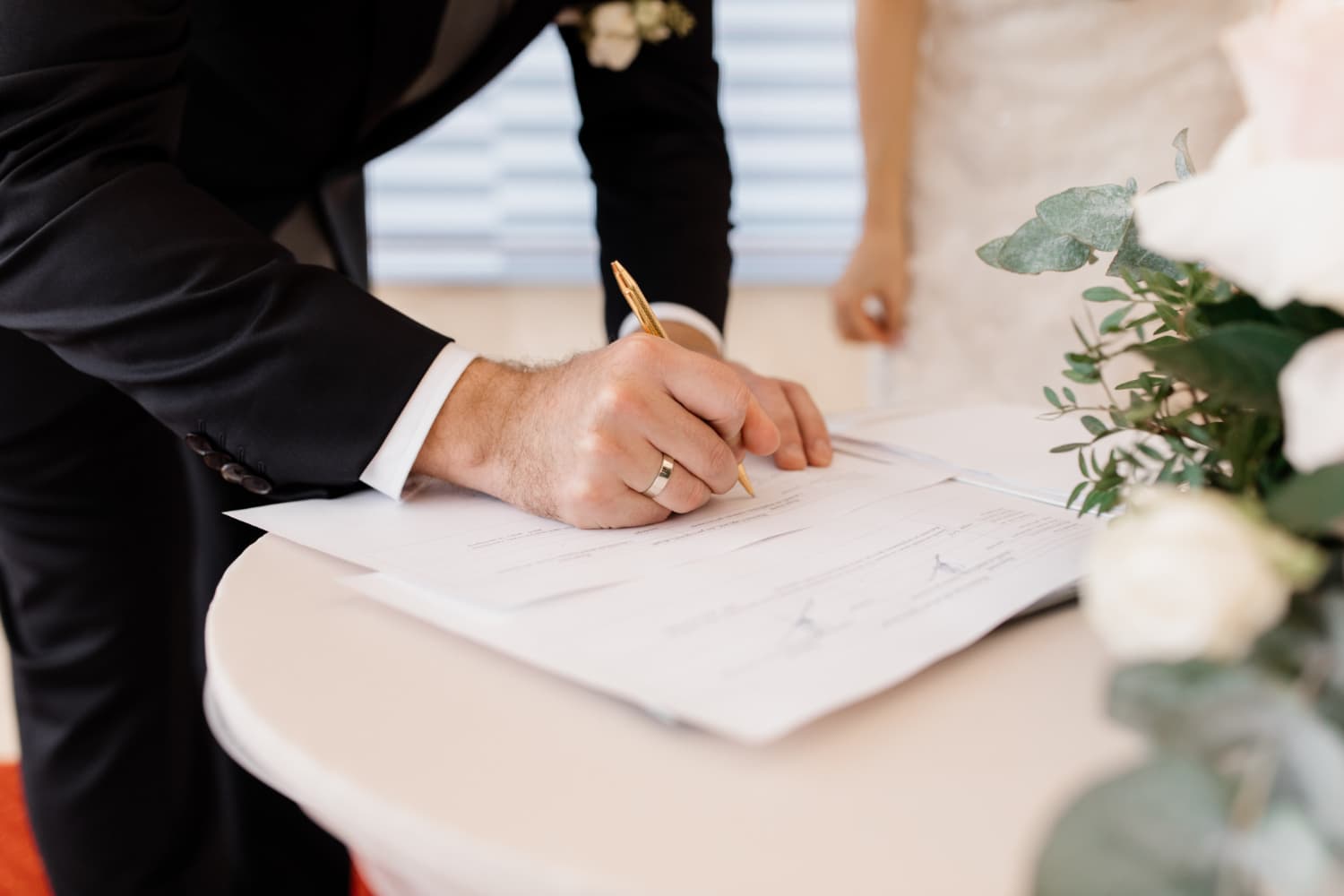
After the ceremony, the officiant completes the license, adds the required signatures, and ensures any witnesses sign where required by state law.
Filing the Marriage License
Once the ceremony is complete, the officiant is usually responsible for returning the signed marriage license to the county clerk’s office. Most states have a filing deadline, often within a few days of the wedding. If the license is not filed on time, the marriage may not be legally recorded, which can create delays when requesting official records later.
Receiving Your Marriage Certificate
After the county processes the filed license, you can request certified copies of your marriage certificate. Many couples order multiple copies since they are often needed for name changes, updating identification, banking, insurance, and other legal records.
If you plan a name change, having extra copies on hand makes the process smoother, especially after celebrating at a romantic wedding venue in Indianapolis where your focus should be on the memories, not paperwork.
See What Makes The Sixpence Venue Special
Frequently Asked Questions About Marriage License
Can we get married in a different state than where we live?
Yes. You can get married in any state, but you must follow that state’s marriage license requirements and apply for the license there.
Where do we apply for a marriage license if we’re having a destination wedding?
You apply in the state, and often the county, where the wedding ceremony will take place, not where you live.
Can we elope or get married at a courthouse?
Absolutely. As long as you have a valid marriage license and meet local rules, courthouse weddings and elopements are legally recognized.
Can we get a same-day marriage license?
In some states, yes. States without waiting periods allow you to apply for a marriage license and get married the same day.
How quickly can we get married after applying for a license?
This depends on the state. Some allow immediate use, while others require a waiting period of one to several days.
Do marriage license rules vary by county?
Yes. While state laws set the basics, counties may have different procedures, fees, or appointment requirements.
How do I change my name after getting married?
You will need certified copies of your marriage certificate to update your name with Social Security, the DMV, banks, and other institutions.
How long does it take to update my name after marriage?
The timeline varies, but most people complete the process within a few weeks to a few months, depending on agency processing times.

As the co-owner and designer of The Sixpence, Shelby Dempsey brings her extensive background in wedding photography and videography to create a purpose-built venue that blends aesthetics with functionality. After capturing nearly 400 weddings across the country and internationally, Shelby designed The Sixpence with a photographer’s eye, ensuring that every space not only looks beautiful but also serves the practical needs of both couples and photographers on their special day.