

Choosing a wedding dress code may seem like a small detail in the planning process, but it plays an important role in setting the tone for your celebration. Before guests ever step into your venue, your dress code gives them a glimpse into the kind of evening and aesthetic you are creating, and helps them arrive feeling confident, comfortable, and appropriately dressed.
From the elegance of black tie to the relaxed polish of dressy casual, every dress code communicates something a little different. While there’s plenty of room to make your wedding uniquely yours, the formality you request from your guests should feel cohesive with the experience you’re providing in return.
Not sure which dress code fits your day? We’re breaking down three different dress codes: black tie, cocktail, and dressy casual, and what each one means for your guests and your celebration.
Black tie
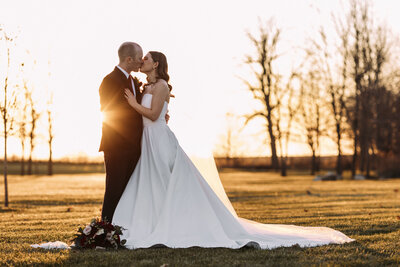
Of the three, black tie is the most formal; think classic evening wear, refined details, and an occasion to truly dress up.

For women, black tie traditionally calls for a floor-length gown. Formal midi or tea-length dresses can occasionally work depending on style, but when in doubt, it’s better to lean more formal than less.
For men, a tuxedo is the traditional choice, typically paired with a formal dress shirt, bow tie, and polished dress shoes. Black is always classic, but depending on the season and setting, a midnight navy, deep green, or other sophisticated tuxedo can also feel appropriate.
And despite the name, black tie doesn’t mean guests literally have to wear black. Color is absolutely welcome. The key is choosing colors and materials that maintain the formality of the occasion.

For fall and winter celebrations, rich jewel tones, deep neutrals, burgundy, navy, emerald, chocolate, and classic black pair beautifully with fabrics like velvet, satin, silk, crepe, and heavier jacquards. Spring and summer black tie can take a lighter approach with soft blues, greens, blushes, pastels, or even brighter color in formal silhouettes. Silk, chiffon, organza, and lightweight satin can maintain that elevated feeling without looking too heavy for the season.
The setting matters, too. A black-tie celebration in a historic estate may inspire a very different palette than one held in a modern downtown space or surrounded by a summer garden. Let the venue and season provide a little direction. The dress code determines the formality, not necessarily the color.
Black tie is particularly well suited to evening weddings and celebrations with an elevated, formal atmosphere. If you choose this dress code for your own wedding, consider whether the overall guest experience carries that same level of formality – from the setting and service to dinner and drinks.
Cocktail Attire
Sitting between black tie and dressy casual, cocktail attire is polished and celebratory without requiring full formal wear. It’s also one of the most versatile, and popular, wedding dress codes.
For women, cocktail dresses and midi dresses are classic choices, but elevated jumpsuits and polished separates can work just as well. Hemlines have more flexibility than they do with black tie, and this is where guests can have a little more fun with color, pattern, texture, and accessories.

For men, a suit is the standard. Darker colors like navy, charcoal, chocolate, or black are especially fitting for evening and cooler-weather weddings, while lighter blues, tans, and neutrals can work beautifully for daytime and warm-weather celebrations. A dress shirt, tie, and dress shoes complete the look.

Cocktail attire also leaves plenty of room to dress with the season. Fall and winter might call for velvet, satin, crepe, brocade, or jacquard in deeper shades and jewel tones. Spring and summer open the door to chiffon, silk, linen blends, lightweight crepe, and playful prints in pastels, brighter hues, and softer neutrals.
Consider the venue as another clue. A cocktail-attire wedding in a garden or greenhouse might inspire florals, softer colors, and flowing fabrics, while an evening celebration in a moody indoor setting might lend itself to richer colors, structured silhouettes, and more dramatic accessories.
Cocktail attire works beautifully for weddings that feel elevated but not ultra-formal. It allows couples plenty of flexibility in the style and flow of their celebration while still encouraging guests to make the occasion feel special.
Dressy Casual
Dressy casual is the most relaxed of the three, but don’t let the word “casual” throw you off. Guests should still look polished and intentionally dressed for a special occasion – just without the expectation of tuxedos, gowns, or formal accessories.
For women, sundresses, midi dresses, jumpsuits, skirts, and elevated separates can all fit the dress code. Fabrics, colors, and silhouettes can typically feel lighter and more relaxed than they would for a cocktail-attire wedding.

For men, dress pants or chinos paired with a button-down shirt are a great starting point. A blazer or sport coat can elevate the look, while ties are generally optional. Depending on the venue and season, loafers or other polished shoes can feel just as appropriate as traditional dress shoes.

This is also the dress code where the setting and season can do much of the styling work. A spring garden wedding might call for floral prints, soft pastels, linen, cotton, or breezy chiffon, while an autumn celebration could lean into warm earth tones, deeper florals, knits, suede accents, or textured fabrics. Summer welcomes lighter materials and brighter color, while winter dressy casual can incorporate richer shades, wool blends, velvet accents, and tailored layers.
Dressy casual often makes sense for daytime celebrations, outdoor weddings, brunch receptions, garden parties, or couples envisioning a more relaxed atmosphere. The key is that relaxed still feels intentional. Both in what guests wear and in the celebration itself.
So, What’s the Difference?
Think of these three dress codes as a sliding scale of formality. Black tie calls for formal evening wear, cocktail attire offers a little more freedom in silhouette and styling, and dressy casual keeps things polished without requiring traditional formalwear.
No matter the dress code, color and personal style are always welcome. Let the season, venue, and setting help guide the details, from rich velvet and jewel tones in winter to airy fabrics and softer hues in spring.


Maddie & Thomas by Sarah Higgins Photography


Cassie & Daniel by The Lang Co.


Jenna & Jackson by Lindy Photo Co.


Peyton & Newt by Ivory Lace Photo & Film


Nora & Ben by Elisha K Photo


Ashleigh & Cameron – Ani Drew Photography

Captured by Megan Malmquist Photography
At The Sixpence, we love seeing how each couple’s attire, design, and details come together to create a celebration that feels entirely their own. Whether your day calls for tuxedos and floor-length gowns, colorful cocktail attire, or something a little more relaxed, the right dress code helps set the tone and gives guests a glimpse of what’s ahead.
Ultimately, choose the dress code that feels like a natural fit for the celebration you’re creating.
For more inspiration, resources, and to see real Sixpence weddings, follow us on Pinterest.

As the co-owner and designer of The Sixpence, Shelby Dempsey brings her extensive background in wedding photography and videography to create a purpose-built venue that blends aesthetics with functionality. After capturing nearly 400 weddings across the country and internationally, Shelby designed The Sixpence with a photographer’s eye, ensuring that every space not only looks beautiful but also serves the practical needs of both couples and photographers on their special day.